Our Blog

I am a senior lecturer in adult nursing at Sheffield Hallam University and nursing lead for Interprofessional Education (IPE), where a diverse range of professions learn with, from and about each other to build collaborative practice and improve patient experience.
The final part of this focuses on service improvement. We teach our students about how to lead service improvement with the patient at the centre. We encourage them to consider the principles of co-production, where people who use services, their families or carers and the care providers work together to develop a service which works best for everyone.
We also introduce them to tools and techniques which will help in planning, implementation and reviewing their idea. Students are expected to develop their own service improvement idea as part of their assessment, to prepare them for leading change in practice.
Why did we decide to develop a game?
Our module runs twice a year and I always evaluate my module formally and informally to see how we can improve things. This year I set up an online page where students could feedback on their experience as soon as teaching was finished. Feedback was very positive, but it was clear there was an issue with consistency: not everyone was receiving the same activities. And not everyone could see the rationale for the activities or how they linked to practice.
Staff feedback confirmed this: they didn’t enjoy facilitating the last activity and sometimes found an alternative or just discussed the principles. It was clear we needed to find a new activity which was interprofessional, fun, relevant to clinical practice, made the assignment brief clearer, was easier for facilitators to deliver and was more environmentally friendly as we were currently wasting lots of paper! A tall order, to say the least.
How we went about it
If we were teaching students to co-produce improvement work with the people who would be using services, then we should follow the same principles. So I enlisted the help of several enthusiastic colleagues along with Co:Create, the coproduction team at South Yorkshire Housing Association (link). I spoke with staff at local hospitals and the team at Fab Change Week (link) and researched what was already out there. We had a workshop with Co:Create to brainstorm what we needed, what we wanted, what students needed and wanted and what our stakeholders (employers and service users) needed and wanted.
I used an online survey to ask our students more about what they needed and invite them to a focus group. We refined our ideas for a game and developed a prototype. Co:Create facilitated the focus group. We had to consider logistics such as the cost of the 200 copies we would need and the simplicity of the instructions to ensure students all received the same experience.
We decided to develop a video to introduce the activity to ensure we highlighted key points such as the relevance to practice and the importance of keeping the patient at the centre of the service improvement. I liaised with our faculty technical team to develop our game and the printed cards ready to use in IPE week.
 The game we created

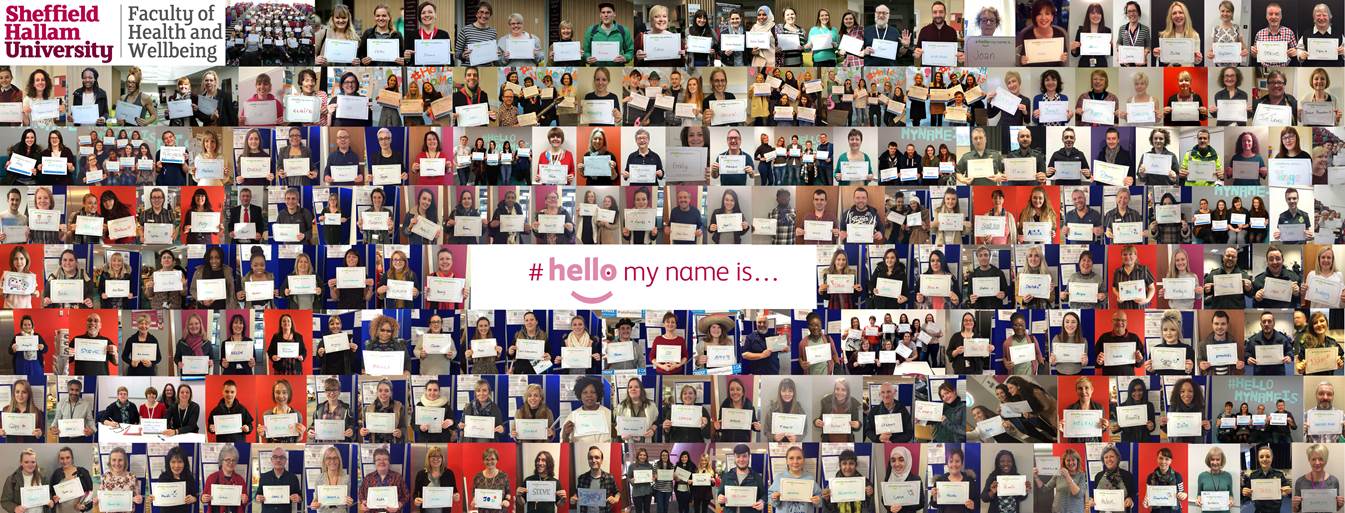
We have developed a game which uses “hello, my name is…” to introduce a patient to the group. This was a service improvement developed by Kate Granger, a doctor with cancer who recognised that care is often very impersonal and we don’t always introduce ourselves. This means the game is different every time it is played, depending on the card selected.
Students select a card explaining the scenario. They are asked to draw a process map looking at the patient journey. Then they pick a further card: the “Care Opinion” card! This provides them with service user feedback explaining the patient’s perspective and their experience, which helps them to develop their process map from a co-production perspective and go on to develop their service improvement as they progress through the game.
Every time the game is played it will be a different patient in a different location with a different experience… so the service improvement possibilities are endless. We will be delivering this activity at the start of the new curriculum, so we’ll let you know how it goes. And, of course, we’ll be collecting feedback from students and staff, to help us improve it.
Lucy Kirkham: 03/10/2018


We are so grateful to have a guest blog written by John Timms, the Event Director of the Westfield Health British Transplant Games Birmingham 2018. 
2nd to the 5th of August sees the 41st edition of the Westfield Health British Transplant Games live from Birmingham. This will be my 13th Games as Director on behalf of Charity Transplant Sport with my company MLS Contracts Ltd, and each year its amazing to see the sports and competitors grow in number. This years games will see over 1000 competitors and a Games family of nearly 3500 people descend on the West Midlands.
The British Transplant Games are the flagship project of the charity Transplant Sport and demonstrates the benefits of transplantation, encouraging transplant patients to regain fitness, whilst increasing public awareness of the need for more people to join the NHS Organ Donation Register and discuss their wishes with their families. They also seek to thank and celebrate donor families and the gift of life.
Over the 4 day event we will see sports ranging from darts and snooker to swimming, 5-a-side football and a full track and field event with competitors ranging from age groups 0-5 years to 69+. It’s always great to welcome back athletes from previous years’ events as well as meeting new members of the Transplant Sport family.
Each athlete represents the region or hospital where they received their life changing gift and are supported by the transplant team at that unit as well as family members. The games focus on not only the recipients of organ donation but also the donor families and live donors there are events where you can see family members competing together with either as donor and recipient! You can find some our amazing competitor’s stories here.
One of the highlights of the event is the Donor Run. The Donor Run takes place every year and is open to all transplant recipients, donor families and the general public to complete or run (most walk with a smile!) for fun on either a 3 or 5 km course. The run is one of the highlights of the event which sees Transplant recipients, the families of organ donors and supporters of the Games come together to walk or run in gratitude of all organ donors and their families.
The Games brings together so many people whose lives have been saved thanks to organ and tissue transplants and hard work goes into making sure that the General public can come along and help spread the message about signing the Organ Donor Register, and most importantly, letting family know their wishes.
We love working with our partners to deliver a great sporting event and celebrate the hard work of transplant teams throughout Great Britain and Northern Ireland. Seeing how Transplant Sport works in the rehabilitation of transplantees to regain physical strength and personal drive is amazing.
If you would like to join our team as a volunteer or simply sign up to our Donor Run, visit www.britishtransplantgames.co.uk or follow us on twitter @WHBTG.
Check out the Games video https://www.facebook.com/BritishTransplantGames/videos/1762171163833001/
Guest blog: John Timms 02/08/2018
ORGAN DONATION; Is Opting out the future? 
Who am I?
I am Paula Siddall, Lecturer in Adult Nursing at Sheffield Hallam University. I am part of the Level 6 Consolidating the Science and Practice of Nursing team. My nursing career has been spent in Critical Care.
Why is this of interest to me?
During my Critical Care Career I have been privileged to have facilitated the organ donation process for many patients and their families. Organ donation is divided into two categories; Donation after Brain Stem Death (DBD) and Donation after Circulatory Death (DCD). DBD is where a neurological criterion is used to confirm death, where irreversible brain injury has been acquired. This is commonly known as Heart Beating Organ Donation, therefore only possible where the patient is mechanically ventilated. DCD, also described as Non-Heart Beating is where treatment is withdrawn from the patient in a planned controlled manner. Following cardiac death the cardio-respiratory criteria is applied to confirm this.
I have facilitated both types of organ donation, both very challenging and highly emotional but also very rewarding. During this time I have built effective trusting relationships with the families and the Senior Nurses for Organ Donation (Known to us as SNODs). Working with many SNODs over my critical care career has enabled me to gain an insight into their working lives and gave me a profound respect for their roles. When a patient has been identified as a potential donor the SNODs are contacted, they arrive and provided expert 1:1 support, knowledge and skills for both families and staff. SNODs provide families with choice, they allow them to make informed choices. They can check the Organ Donation Register (ODR) and inform families of the patient’s preference if recorded.
Due to intense clinical experiences I have developed a specialist interest in Organ Donation, and I regularly think about how the future will be. According to NHS Blood and Transplant (2018) we currently have 6085 people awaiting a transplant, with 3404 additional people currently suspended. The NHSBT (2018) Transplant activity report states that in March 2018 411 people died waiting for a transplant, with a further 755 people removed due to deterioration with a consequence of being medically unfit for a transplant.
Knowing this, I ask myself why does this happen? What will the future hold? Will myself or a family member be on that transplant list some day?
Where are we now?
Currently within England we have an opt-in system, this is where people have to register their preferences on the Organ Donation Register (ODR). There have been recent changes to ensure that the ODR complies with Human Transplant (Wales) Act 2013, it is now an option to register to not donate.
Under the Human Tissue Act (2004) if a person in England is on the ODR this is classed as prior consent, there is no provision in the act for this to be overturned, this decision should be legally valid. The SNODs can communicate this information sensitively to families, however I have witnessed families veto this decision and refuse for the process to go ahead. Within practice this is respected and the process is not facilitated. From a legal aspect I cannot understand why this is acceptable practice, when we have people dying whilst waiting for a transplant. However this experience is very different when in clinical practice, the thought of organ donation can be a very scary concept for families who are going through a very emotional time; they lack understanding of the process and the outcome. They do not understand that their loved one could create life for many. Forcing this upon them can have damaging effects upon their grieving process.
On the 1st December 2015 Wales introduced the first Opt out organ donation system in the UK. People can still register to be on the ODR, however if they do not opt out this is given as deemed consent, stating they have no objections to donating organs after death. There is also the option to opt out, and also an option to appoint a representative to make this decision after your death.
I believe this is the way forward for England, we need to make Organ Donation a normal part of the dying process, and we need to educate our families and friends on the overwhelming long term benefits this will have for the person awaiting a transplant.
The Future
In 17/18 the government ran a consultation into the proposal of an Opt Out system within England, A response to this is anticipated in the summer (2018).
We also need further education for members of the public, Organ Donation is not a concept that we think about unless we have to. Now is the time, speak to your family and friends, tell them your preference, discuss your wishes, and encourage them to do the same. Prepare for your future and the future of others.
Paula Siddall 29/07/2018
Why Involving Family Matters:
Lessons from a Reversal of Roles
Lucy Kirkham
Tags: acute, carer-support, end-of-life, family-carers, hospitals, nurses, regulation
Lucy Kirkham was a critical care nurse for 11 years and has experience as a district nurse. Three years ago she switched to higher education, and now (as Senior Lecturer in Adult Nursing and IPE Lead for Nursing and Midwifery) teaches student nurses and qualified staff about care and compassion. Here she discusses the importance of the interactions between nurses and family, explaining how she came to realise how much of a difference it can make:
I recently read an article on social media which really struck a chord with me! It’s something that’s been on my mind for a long time. The article was from an American journal which described a study where staff had been asked if they could break or change the rules within their service area to ensure a better care experience what would it be? The most popular response from participants was to eliminate set visiting hours and other restrictive policies that reduce the ability of families and loved ones to be with patients.
As a former critical care sister I am all too familiar with these policies. We had very limited visiting hours, in line with hospital policy. Relatives were told this was to enable staff to care for their loved one, for medical reviews, physiotherapy sessions, nursing interventions and personal care. The standard response was that visitors around the bed made it less safe due to limited space and delays to patient care. They were perceived to increase noise levels and increase infection levels. Visitors were rarely involved in washing, feeding or individualised care planning. This was regardless of the level of involvement they had had prior to admission.
A national review of visiting in critical care (BACCN, 2012) found that many departments had a two visitors per bed rule and time restrictions in place. However their review concluded that although staff may feel visitors are detrimental to their ability to deliver care, they could actually be a source of useful information to assist person centred care. Worries about infection control were unfounded and even child visits were found to be beneficial as they helped patients to maintain their identity. Visitors were acknowledged as a positive psychological aid to patients. The review concluded that where possible patients should be allowed to decide for themselves. There has been a subsequent call for flexibility but there needs to be a balance to enable care to be delivered and families to maintain their own wellbeing.
It took a very personal experience to see beyond this guidance, these rules and regulations. My Dad was admitted to critical care. For two weeks our family visited every day within official visiting hours. I went every day between work and childcare commitments. He must have been very scared but all he could do was squeeze my hand as the tight mask on his face was not to be removed. No one ever spoke to our family, except to ask us to wait outside whilst they took handover or assessed him or administered personal care (which seemed to take up most of visiting time). They never gave us updates except to tell us to take his bag home as he “wouldn’t be needing his things any longer”. I took in photos to stick on the wall so they’d see what he was like when well and how loved he was. I didn’t tell them I was a nurse as I didn’t want to appear troublesome. Everyone seemed very busy and had little time to talk to us, but I could see that things weren’t looking good. I got the distinct impression we were a nuisance so didn’t push it when I didn’t get answers. This major event in our lives was clearly not a big deal to them. But I knew that they dealt with this every day.
When he died my Dad was on his own because no one rang us to say he had deteriorated. All this made losing him worse, because we weren’t there for him when he needed us and we couldn’t help him when we wanted to. This was very traumatic and took a long time to come to terms with. So what did I do? I changed my practice. Every visitor I met after this, I talked to them and involved them. I found out about them and how they were dealing with their loved one’s admission. I encouraged them to be involved in care, if they wanted to. When they asked for flexible visiting I listened and tried to oblige. I made sure they took care of themselves too. If they were frightened or anxious I took the time to explain things to them. I had been too busy to ensure I always did this before. But now it was a much higher priority to me because I had experienced being in their shoes.
If only social media had been around then! A change in practice needs collaboration and a team approach for the results to be wide reaching. Thank goodness for John’s Campaign and the many wonderful people trying to share their stories and spread the word. It’s amazing to see hundreds of organisations listening and coming on board one by one so that other families and carers are not just allowed, but welcomed onto the ward and recognised for the contribution they can make and the support they need.
Lucy’s advice to critical care staff: “Put yourselves in the shoes of the patient and their family. Try to do more to allow them to have time together. The family members may work or have children but they are committed to visiting every day. Don’t leave them sat in the waiting room, time is precious. Try to involve the family. There’s lots they can’t do but lots they can. They could help provide mouth-care or nutrition, they could help settle an anxious or agitated patient and many more things. Talk to the family and ask them about their loved one, when someone is this sick you don’t get a true picture of who they are or what they are like. No one would have believed my dad used to run marathons or how strong he was! If you think that the end is near then ask that family what they’d like. (For example: Do they want to be present, would they like privacy or are they frightened and want your company?)
Lucy Kirkham originally wrote for John’s Campaign 15th May 2017

This week 14th to 18th May; is Dying Matters Awareness Week. Leisa Anderton, Lecturer in adult nursing for SHU discusses further
If you haven’t heard of Dying Matters before; this is a coalition of individuals and organisations across England Wales. The aim is to help people talk more openly about death, dying, bereavement and to help individuals to make plans for the end of life. This is something that I believe is incredibly important and a subject which still has many taboos in our society regarding open and honest discussions around our wants and needs. The difficulty and challenges that we face in having these discussions in society are reflected in the difficulty and challenges that practitioners experience in practice. All too often phrases such as “I don’t know what to say” or how do you start a conversation around death and dying when someone has just received a diagnosis confirming the need for Palliative or End of Life Care? Whilst these are never going to be easy conversations to have or to start, until we as a society are more comfortable and open about what we want, then the conversations will remain awkward and uncomfortable in practice.
So how do we break down these taboos? One example that has been developed and promoted through Dying Matters is the Death Café. These are events that are held across England and Wales in a variety of different settings where individuals can come and talk about dying, death, bereavement in a café style situation. Here at SHU, we will be hosting our Death Café on Wednesday 16th May in Heart of the Campus. There will be a variety of different individuals that you can meet and engage in different activities and discussions around key themes and topics. Each year there is a central theme to pull all the activities together and this year the theme continues from the 2017 campaign to consider “What can you do….in your community?”
If you want to find out more about dying matters and you have some time to spare then why not join us between 11am- 1pm. Tea/ Coffee and cakes provided.
Leisa Anderton, 14/05/2018

We are doing fantastic work with the National Mouth Care Matters programme, Suzanne Monks lead for the SHU mouth care matters project, shares details
My last role was an end of life care facilitator and I was often horrified with the condition of some mouths of patients’. It angered me that outdated practice continued, which was not based on evidence but rather due to availability of tools and products. Even when a government alert was issued stating the dangers of pink mouth swabs (commonly used in practice for patients who are unable to perform mouth care independently) this alert and guidance was largely ignored and the practice continued also disregarding the research which proved they were ineffective at cleaning mouths.
I am not alone in my concerns for oral hygiene. Research has found that oral symptoms experienced are largely underestimated or ignored by health care professionals and the management and treatment inadequate. The priority for mouth care among nurses and care staff is found to be low. This may stem from lack of education both in pre-registration nursing and in the workplace for qualified nurses and non-qualified carers. Most oral care is delegated to junior nurses or non-qualified staff and is often described as an unpleasant task with low priority. Alarming attitudes to mouth care remain, research has highlighted how oral care can be considered to be more disdainful than continence care. Excuses for not carrying out oral care have been found to be due to time constraints, heavy workload and low staffing levels all of which are inexcusable and do not permit oral assessment or oral hygiene to be overlooked.
The varying approaches and tools used in mouth care for patients who are unable to carry out oral care independently are not always evidence-based and there is no one generally accepted, evidence-based approach to oral care for these patients championed in literature. Many tools and materials used in oral care have been found to be based on historical anecdote rather than research evidence with inadequate and unscientific mouth care procedures being conducted.
There is little evidence-based research or understanding to support how often mouth care should be carried out and is dependent on the nurse or carer assessing the mouth and deciding upon approaches and tools.
The National Mouth Care Matters programme was started in the acute trusts in Kent Surrey and Sussex and plans to roll out their programme nationally throughout 2018/2019. Their aim is to educate and inform healthcare professionals to provide high-quality oral care for patients in all care settings. As part of the national roll-out, trusts will be part of a training programme with a train-the-trainer approach. This will equip individuals with the skills and knowledge to enable them to implement this programme and have access to a range of digital Mouth Care Matters training resources and training packages.
Here at Sheffield Hallam University, we are proudly part of the National Mouth Care Matters project. We have formed a SHU mouth care matters project group to shadow the National Roll out along with using more local guidance and information from the SWYPFT and SHU oral hygiene steering group, with which I am a founding member. We are the only university so far to be involved in this project. We have access to the train the trainer package and plan to educate and inform our students about high-quality mouth care so this can be replicated in the practice setting.
Once the training package has been undertaken by ourselves, we plan on utilising this to carry out a pilot study and educate level 4 September 2018 cohort nursing students, carrying out research as part of the project to look at impact. If successful this training and educational package can then be rolled out through the health and wellbeing department.
Suzanne Monks 23/04/2018