
What are models?
Models are simplifications of complex phenomena or processes. A model of something can help us understand it better by categorising and dividing up complexity.
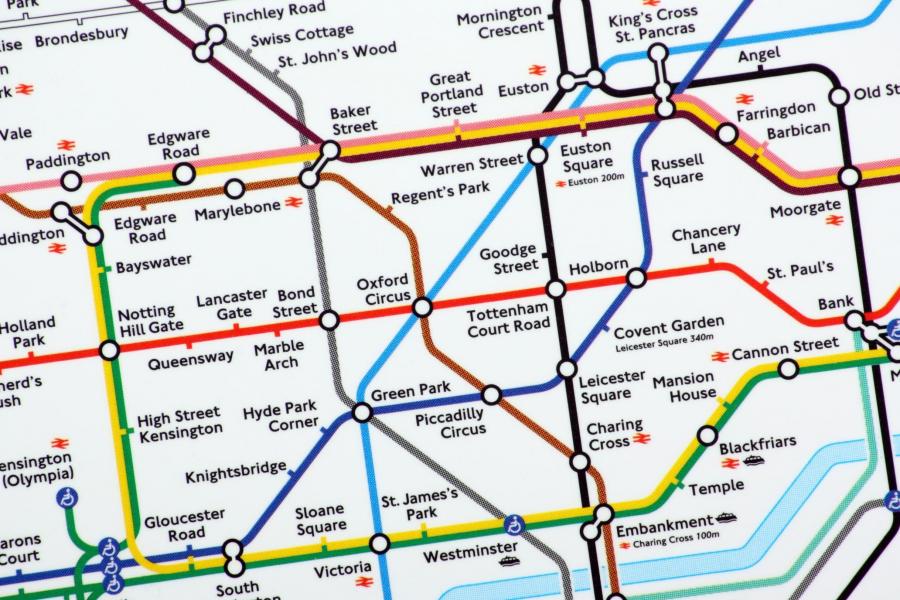
Think about a map of the London Underground.
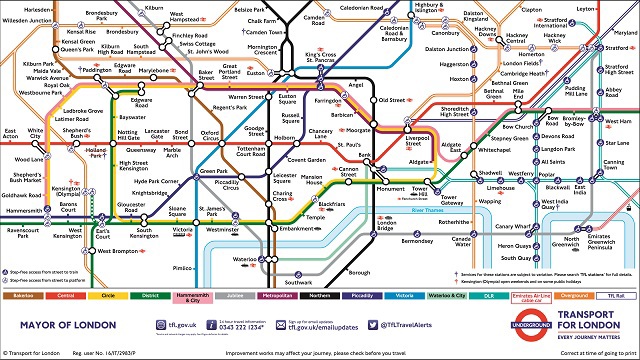
This is a model – in that it categorises by colour and simplifies the layout. The differences between the stations are not accurately displayed, the routes the trains take are not straight lines – but this model helps us to understand how to use the underground – it gives us a framework for understanding and means we can practically get from South Kensington to Mornington Crescent without having to understand the whole layout of the network in detail.
Models of reflection can help us to navigate our way through the act of reflecting on our practice, even if we are novices at both clinical practice and critical reflection. They can help us ‘get around’ and learn about reflection. Different models focus on different approaches and aspects, and you may find different ones helpful at different stages of your learning.
Why should I use a model?
‘Models of reflection can be used to guide the process by providing prompts to spur the analytical and evaluative process’ (Wong, Whitcombe & Boniface, 2016, p.477)
- Help you go deeper in your analysis
- Helps you experiment
- Prompts you to ask questions we have not thought of
- Prompts you to look at things from a different perspective
- Gives you a structure
- Gets you started with reflection
How do I choose a model?
- Try them out
- See which suits you
- There is no one best model – it depends what fits you and your needs at the time
- A model should challenge you – your assumptions, beliefs and norms.
- You don’t have to use a model at all – with experience prompts and guides can become internalised
Photo by George Xistris on Unsplash